Monday 28 September 2026, 7.30pm, Nottingham Irish Centre, £3
Irish history talk/discussion: This Great Calamity
Famine struck Ireland in 1846 and, over the following three years, caused death on an almost unimaginable scale. This was an entirely avoidable tragedy caused by racism and blind ideology. It changed Ireland, and the long tail of its folk memory lasted well into the following century and set the path for the independence struggle.
Monday 5 October 2026, 7.30pm, Nottingham Irish Centre, £3
FILM: Black 47 (2018)
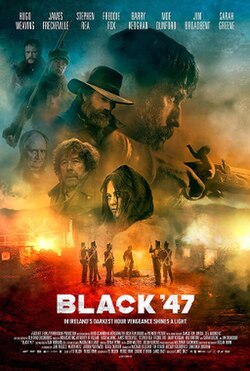
Lance Daly’s acclaimed film is set in 1847 with Ireland in the grip of the Great Famine. Feeney, a hardened Irish Ranger who has been fighting for the British Army abroad, abandons his post to return home and reunite with his family. He’s seen more than his share of horrors, but nothing prepares him for the Famine’s hopeless destruction of his homeland that has brutalised his people and there seems to be no law and order. He discovers his mother starved to death and his brother hanged by the brutal hand of the English. With little else to live for, he sets out on a destructive path to avenge his family.
Monday 12 October 2026, 7.30pm, Nottingham Irish Centre, £3
Irish history talk/discussion: The Big Fella
Michael Collins was, arguably, the most consequential Irish politician of the twentieth century. He was, at one point, the most wanted man in the British Empire who, whilst living openly in Dublin, organised and ran the struggle for independence and then negotiated the Treaty that gave three-quarters of Ireland freedom from British rule, but also partitioned Ireland and brought about a bitter civil war.
Monday 19 October 2026, 7.30pm, Nottingham Irish Centre, £3
FILM: Michael Collins (1996)
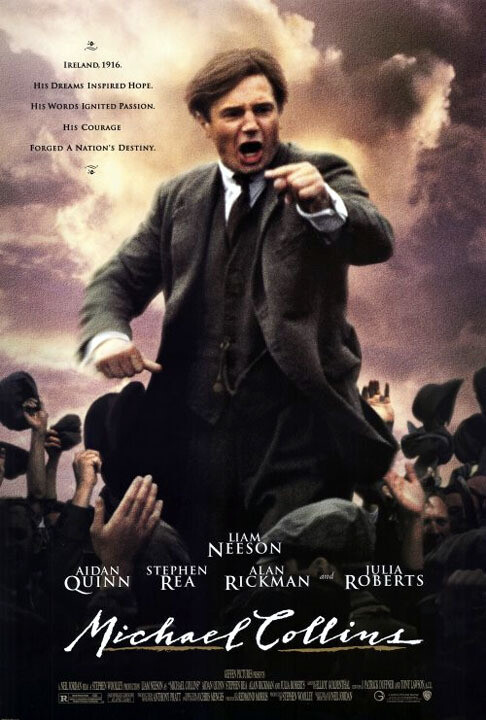
Neil Jordan’s iconic and controversial biopic of Michael Collins opens at the end of the Easter Rising in 1916 to his death in 1922 during the civil war. It stars Liam Neeson as Collins and Alan Rickman as Eamon deValera. It depicts Collins’s evolution from defeat and internment following the Rising to leadership of the Irish Free State and the civil war that followed. Central to the film is Collin’s bitter relationship with DeValera and it ends on DeValera’s judgement: ‘History will record the greatness of Michael Collins, and it will be at my expense’.
Monday 26 October 2026, 7.30pm, Nottingham Irish Centre, £3
Irish history talk/discussion: The War of Independence and the Civil War
The Irish War of Independence was a short but savage conflict in which a poorly trained and badly armed guerilla force fought the most powerful army in the world to a standstill leading to independence for three quarters of Ireland. This session looks particularly at Cork which became the epicentre of the War and where next week’s film The Wind that Shakes the Barley, is set.
Monday 2 November 2026, 7.30pm, Nottingham Irish Centre, £3
FILM: The Wind that Shakes the Barley (2006)
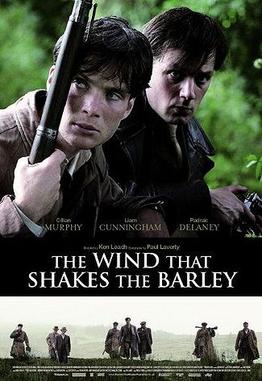
The Wind that Shakes the Barley won the prestigious Palme d’Or for Ken Loach for his depiction of the War of Independence in Cork, based on real events. Cillian Murphy and Pádraic Delaney depict the broken bonds and the betrayal of a revolution in what is one of Loach’s most powerful films.
Monday 9 November 2026, 7.30pm, Nottingham Irish Centre, £3
Irish history talk/discussion: A Free State for all, or just for the few?
Ireland achieved freedom for 26 of its 32 counties in 1922. But what kind of freedom was it? For the many thousands of Irish people who were forced to emigrate to Britain and beyond there was often a sense of betrayal, the knowledge that an independent Ireland had no place for them. To those who left, and for many of those who stayed, the promise of the Easter Rising ‘to cherish all of the children equally’ seemed a long way from the reality of Ireland, plagued by what the writer Colm Toibín called the “grubbiness of Irish politics after independence”, as depicted in next week’s film Jimmy’s Hall.
Monday 16 November 2026, 7.30pm, Nottingham Irish Centre, £3
FILM: Jimmy’s Hall (2014)
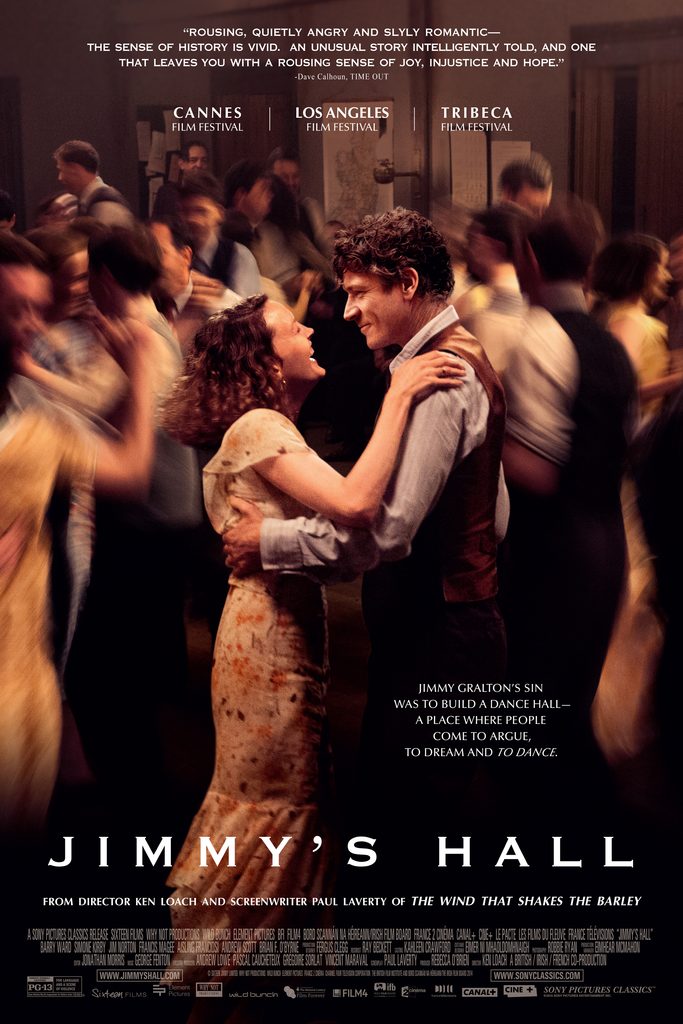
Jimmy’s Hall is the second of Ken Loach’s films which deals with the Irish revolution and its aftermath. It is based on the true story of James Gralton who had fought for Irish independence and, having emigrated to the United States, returned home to Leitrim in 1932 to find an Ireland which fell far short of the ideals for which he had fought. He reopens a local community hall as “a safe space where we can think, talk, listen, laugh and dance”. But this runs foul of the local priest and conservative politicians who feel threatened by what they cannot control.
Monday 23 November 2026, 7.30pm, Nottingham Irish Centre, £3
Irish history talk/discussion: The Troubles
The partition of Ireland in 1922 left a minority Catholic population stranded in a sectarian state. Their oppression and discrimination were facilitated and then ignored by the British government; and in the South, despite the rhetoric of taking back ‘The Fourth Green Field’, the North was also effectively ignored. Partition was like a ticking time bomb which eventually exploded in 1969. The Troubles lasted until the Good Friday Agreement brought peace in 1998 with over 3700 fatalities and almost 50,000 people injured.
Monday 30 November 2026, 7.30pm, Nottingham Irish Centre, £3
FILM: ’71 (2014)
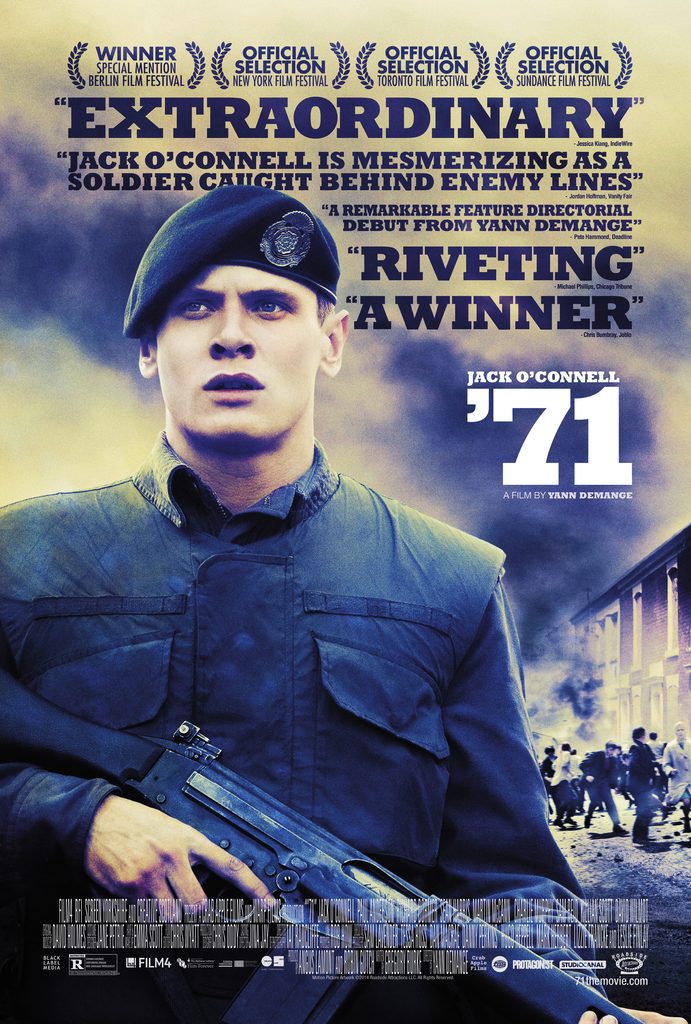
’71 is set in West Belfast during the most violent period of the Troubles and follows a young British soldier who is separated from his unit during fierce fighting with the IRA. The Guardian described it as ‘a taut thriller, with great control of action and pace, and an outstanding re-creation of the West Belfast war zone’.
Monday 7 December 2026, 7.30pm, Nottingham Irish Centre, £3
Irish history talk/discussion: A Community Under Siege
The Troubles impacted not only those on the island of Ireland but also the Irish community in England. The IRA quickly learned that a bomb in an English city had a far greater impact than one in Northern Ireland. As a result, the Irish community became collectively suspect, leading to some of the worst miscarriages of justice in British history. Next week’s film tells the story of one these miscarriages.
Monday 14 December 2026, 7.30pm, Nottingham Irish Centre, £3
FILM: In the Name of the Father (1993)
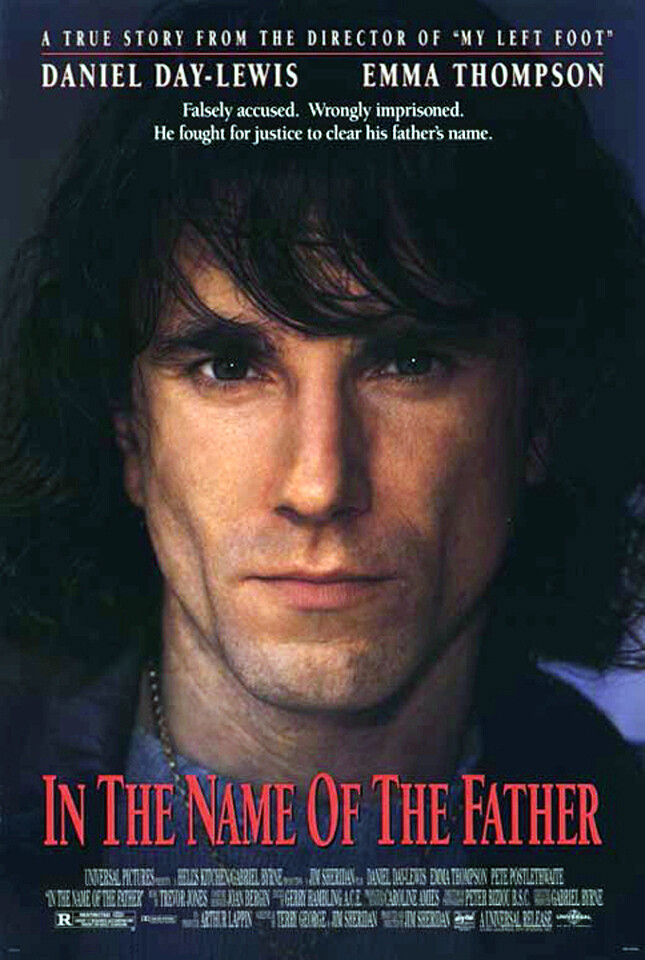
In the Name of the Father is considered to be one of the best films of the Troubles. It tells the story of the Guildford Four, wrongly convicted of an IRA bombing. It focuses on one of the Four, Gerry Conlon (brilliantly played by Daniel Day Lewis). A group of Conlon’s relatives, collectively known as the Maguire seven were also wrongly convicted of being part of the bombing campaign and spent up to 14 years in prison. Among them was Conlon’s father, Giuseppe, who had travelled to London from Belfast to help his son mount a legal defence and died in prison in 1980.